PicoScope 5000D Series, 60 MHz PC Based Oscilloscope 2-Channel
- RS Stock No.:
- 174-9589
- Distrelec Article No.:
- 301-11-345
- Mfr. Part No.:
- PicoScope 5242D
- Manufacturer:
- Pico Technology


Currently unavailable
We don't know if this item will be back in stock, RS intend to remove it from our range soon.
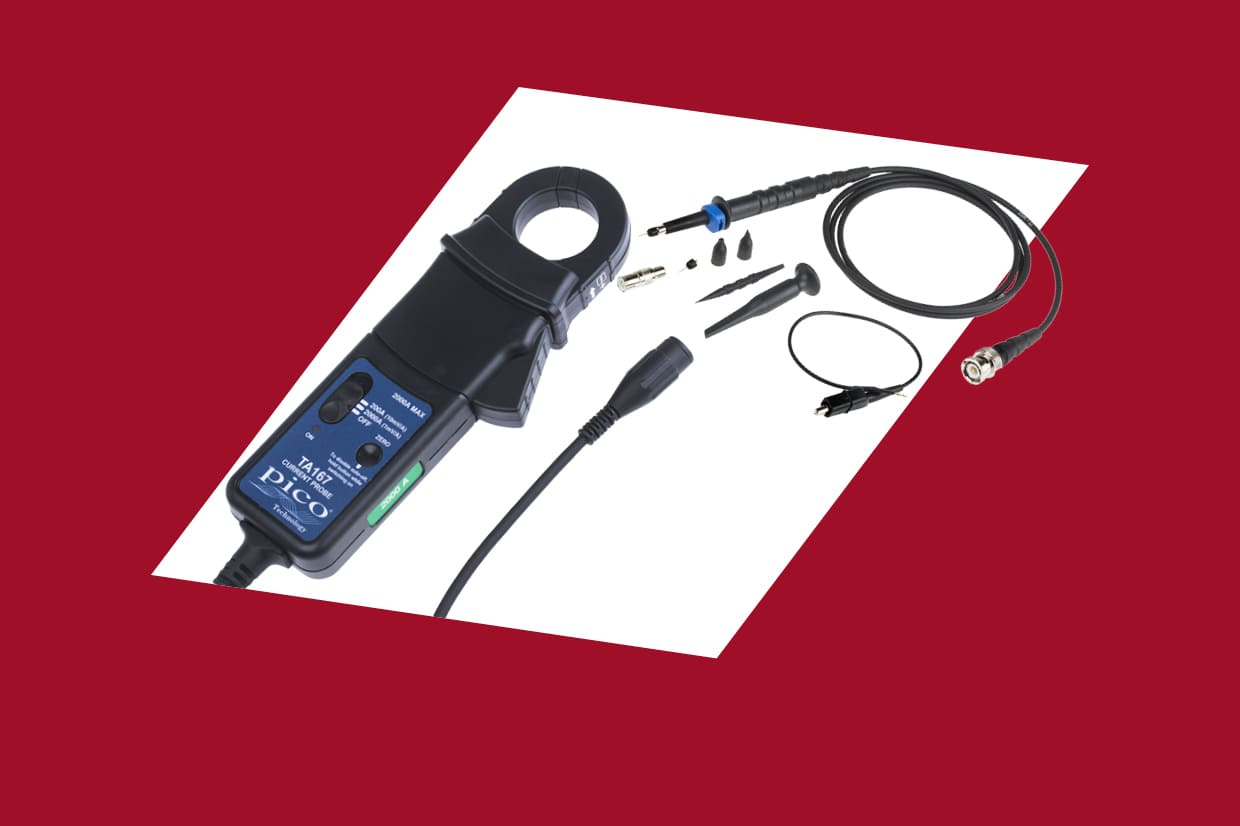
- RS Stock No.:
- 174-9589
- Distrelec Article No.:
- 301-11-345
- Mfr. Part No.:
- PicoScope 5242D
- Manufacturer:
- Pico Technology
Specifications
Technical data sheets
Legislation and Compliance
Product Details
Find similar products by selecting one or more attributes.
Select all | Attribute | Value |
|---|---|---|
| Brand | Pico Technology | |
| Product Type | Oscilloscope | |
| Bandwidth | 60MHz | |
| Number of Channels | 2 | |
| Model Number | PicoScope 5242D | |
| Oscilloscope Type | PC Based | |
| Interface Type | CAN, LIN, RS232, RS422, RS485, SPI, UART, USB | |
| Series | PicoScope 5000D | |
| Length | 190mm | |
| Width | 170mm | |
| Height | 40mm | |
| Standards/Approvals | RoHS, WEEE | |
| Power Source | USB | |
| Minimum Time Base | 1ns/div | |
| Maximum Vertical Sensitivity | 4V/div | |
| Maximum Time Base | 5000s/div | |
| Vertical Resolution | 16 bit | |
| Minimum Vertical Sensitivity | 2mV/div | |
| Rise Time | 5.8ns | |
| Select all | ||
|---|---|---|
Brand Pico Technology | ||
Product Type Oscilloscope | ||
Bandwidth 60MHz | ||
Number of Channels 2 | ||
Model Number PicoScope 5242D | ||
Oscilloscope Type PC Based | ||
Interface Type CAN, LIN, RS232, RS422, RS485, SPI, UART, USB | ||
Series PicoScope 5000D | ||
Length 190mm | ||
Width 170mm | ||
Height 40mm | ||
Standards/Approvals RoHS, WEEE | ||
Power Source USB | ||
Minimum Time Base 1ns/div | ||
Maximum Vertical Sensitivity 4V/div | ||
Maximum Time Base 5000s/div | ||
Vertical Resolution 16 bit | ||
Minimum Vertical Sensitivity 2mV/div | ||
Rise Time 5.8ns | ||
- COO (Country of Origin):
- GB
PicoScope 5000D Series Oscilloscope, 60MHz Bandwidth, 2 Channels - PicoScope 5242D
This oscilloscope is a PC-based measurement instrument designed for signal capture and analysis via a USB connection. It provides a compact, portable solution for engineers who need a high-resolution digitiser with multiple serial interfaces for mixed-signal diagnostics. The unit operates from the host USB supply and integrates with vehicle and laboratory communications standards to support a range of electronic troubleshooting tasks.
Features and Benefits:
• 16-bit vertical resolution improves detail in low-amplitude signals
• 1 ns/div minimum timebase enables fine temporal measurements
• 60 MHz bandwidth captures mid-range frequency content effectively
• 5.8 ns rise time allows accurate edge characterisation
• Multiple serial interfaces simplify mixed-protocol testing
• 1 ns/div minimum timebase enables fine temporal measurements
• 60 MHz bandwidth captures mid-range frequency content effectively
• 5.8 ns rise time allows accurate edge characterisation
• Multiple serial interfaces simplify mixed-protocol testing
Applications
• Suitable for automotive network diagnostics with CAN and LIN
• Ideal for embedded systems debugging using SPI, UART and RS232
• Used with sensor research requiring high vertical fidelity
• Can be used for field measurements where USB power is required
• Used for education laboratories needing portable PC-based scopes
• Ideal for embedded systems debugging using SPI, UART and RS232
• Used with sensor research requiring high vertical fidelity
• Can be used for field measurements where USB power is required
• Used for education laboratories needing portable PC-based scopes
What power arrangement does it use?
It is powered directly from the host computer via USB for portable operation.
Which serial interfaces are available for protocol analysis?
It provides CAN, LIN, RS232, RS422, RS485, SPI and UART connectivity.
How many channels does it offer for simultaneous acquisition?
It features two independent input channels for dual-signal observation.
What vertical sensitivity range can be selected?
The instrument supports vertical sensitivity settings from 2 mV/div up to 4 V/div.
What approvals or environmental standards are noted?
It conforms to RoHS and WEEE directives for material and disposal controls.